



The University of Texas at Dallas, USA.
Abstract
Artificial Intelligence (AI) techniques ae being applied to numerous applications from Healthcare to Cyber Security to Finance. For example, Machine Learning (ML) algorithms are being applied to solve security problems such as malware analysis and insider threat detection. However, there are many challenges in applying ML algorithms for various applications. For example, (i) the ML algorithms may be subject to cyber-attacks and (ii) they may violate the privacy of individuals. This is because we can gather massive amounts of data and apply ML algorithms on the data to extract highly sensitive information. Also, the attacks to the ML algorithms could result in catastrophic errors including in cyber physical systems such as transportation systems. The ML algorithms have to be resilient and recover from faults, malicious or otherwise. In addition to machine learning, the Generative AI (GenAI) systems may also be subject to attacks. On the other hand, both ML and GenAI algorithms could enhance the security of transportation systems.In this presentation, we discuss our research we are conducting as part of the USDOT National University Technology Center TraCR (Transportation Cybersecurity and Resiliency) led by Clemson University. In particular, we describe (i) the application of federated machine learning techniques for detecting attacks in transportation systems; (ii) publishing synthetic transportation data sets that preserves privacy, (iii) developing resiliency solutions for transportation systems to recover from malicious attacks, (iv) examining how GenAI systems are being integrated with transportation systems to provide security, and (v) improving the accuracy of the data to transportation systems that ensure integrity. Finally we discuss how the various features such as security, privacy, and integrity could be integrated so that robust transportation systems are developed.
Biography:Bhavani Thuraisingham is the Founders Chair Professor of Computer Science and the Founding Executive Director of the Cyber Security Research and Education Institute at the University of Texas at Dallas (UTD). She is an elected Fellow of the ACM, IEEE, the AAAS, and the NAI. Her research interests are integrating cyber security and artificial intelligence/data science including as they relate to the cloud, IoT, and Transportation Systems. She has received several technical, education and leadership awards including the IEEE CS 1997 Edward J. McCluskey Technical Achievement Award, the IEEE CS 2023 Taylor L. Booth Education Award, ACM SIGSAC 2010 Outstanding Contributions Award, the IEEE Comsoc Communications and Information Security 2019 Technical Recognition Award, the IEEE CS Services Computing 2017 Research Innovation Award, the ACM CODASPY 2017 Lasting Research Award, and the ACM SACMAT 10 Year Test of Time Awards in 2018 and 2019 (for papers published in 2008 and 2009). Her 45 year career includes industry (Honeywell), federal research laboratory (MITRE), US government (NSF) and US Academia. Her work has resulted in 140+ journal articles, 300+ conference papers, 200+ keynote and featured addresses, seven US patents, sixteen books, and over 120+ panel presentations including at Fortune Media, Lloyds of London Insurance, Dell Technologies World, United Nations, and the White House Office of Science and Technology Policy. She has also written opinion columns for popular venues such as the New York Times, Inc. Magazine, Womensday.com and the Legal 500, She received her PhD from the University of Wales, Swansea, UK, and the prestigious earned higher doctorate (D. Eng) from the University of Bristol, UK. She also has a Certificate in Public Policy Analysis from the London School of Economics and Political Science. She has been featured in the book by the ACM in 2024 titled: “Rendering History: The Women of ACM-W” as one of the 30+ “Women that Changed the Face of World Wide Computing Forever.”

University of Texas at San Antonio, USA.
Abstract
The idea of the technological singularity is reformulated here for a specific discipline. As postulated by singularity thinkers and popularized by Ray Kurzweil, this is the point at which non-human intelligence surpasses ordinary human cognitive limits. That concept is applied to the architecture of buildings. AI has surpassed mainstream architectural culture in one crucial aspect — its capacity to evaluate design that adapts to human emotional health. Postwar architecture is an institutional power system that rewards abstraction, stylistic conformity, and media prestige while discounting embodied human experience. By narrowing judgment, studio pedagogy trains almost exclusively for imitation while suppressing evidence that conflicts with dominant formal ideologies. Yet findings from environmental psychology, health-related design research, neuroscience, and recent AI-based studies show that built form measurably affects empathic response and user well-being. The conclusion is that architecture has suffered an epistemic failure. A discipline entrusted with human welfare has insulated itself from relevant knowledge, whereas now empathic AI can be directed to apply that knowledge to improve the built environment. In this sense, the singularity is already here in architecture.
Biography:Nikos A. Salingaros has been Professor of Mathematics at the University of Texas at San Antonio since 1995. He is a Senior Member of the IEEE. Salingaros collaborated with the visionary architect and software pioneer Christopher Alexander over more than twenty years in editing Alexander’s monumental four-volume book The Nature of Order. Salingaros won the 2019 Stockholm Cultural Award for Architecture, and shared the 2018 Clem Labine Traditional Building Award with Michael Mehaffy. He holds a doctorate in Mathematical Physics from Stony Brook University, New York. Salingaros has directed and advised twenty-five Master’s and PhD theses in architecture and urbanism. He pioneered the application of eye tracking in diagnosing the humanity of buildings and urban spaces. He is on the forefront of applying AI to rewrite the basic principles of architectural and urban design. His recent publications establish a direct causal link between design and creativity, between design and health, and between design and the development of children’s intelligence. An internationally recognized Architectural Theorist and Urbanist, his publications include seven books on architecture and design, two of them co-authored with Michael Mehaffy, plus numerous scientific publications.

Director of Data Science, Marriott International, USA
Abstract
Agentic AI is being sold as a revolution in how enterprises operate. In practice, it is revealing a revolution in what enterprises do not yet know how to do. This keynote confronts the uncomfortable reality that the dominant failure mode for enterprise AI agents is not technical — it is architectural, organizational, and philosophical. Most agentic systems fail not because the models are wrong, but because the surrounding systems are unprepared: the data foundations are insufficient, the governance structures are absent, the escalation paths are undefined, and the measurement frameworks do not exist. This talk presents a frank analysis of where enterprise agentic deployments break down, grounded in real production experience at scale, and introduces a two-layer framework — separating the technical architecture of how agents are built from the operational principles of how they are governed — that enables organizations to move from fragile pilots to resilient, auditable, and scalable production systems. Attendees will leave with a revised understanding of what "agentic readiness" actually means, and a practical blueprint for building AI systems that survive first contact with enterprise reality.
Biography: Nitin Kumar is an enterprise AI leader, researcher,
and practitioner with deep experience building and deploying large-scale AI systems across some of the world's most complex operational environments.
He specializes in agentic AI, generative AI, and intelligent automation — translating cutting-edge research into production systems that deliver measurable business impact at scale. A published researcher, Nitin has developed original frameworks for AI governance, transparency, and accountability that bridge the gap between academic theory and enterprise reality. He holds a Master's in Computer Science from the University of Illinois Urbana-Champaign.
Nitin has delivered keynote addresses and talks at Ai4, CDAO Summit, MLOps World GenAI Summit, and has been invited as a guest lecturer at the US Universities. He is a sought-after voice in enterprise AI, with appearances on the podcasts, and is the author of the forthcoming book Agents Everywhere: Enterprise AI Transformation.
Sensor network monitoring has worked the same way for two decades. Dashboards display readings, humans notice when something looks wrong, and remediation follows hours or days later. This model held up while estates were small and humans were the only consumers of the data. None of those conditions still hold. Sensor estates are scaling into the millions of devices, machine learning models and AI agents now consume sensor data without human review, and the window between bad data and bad decision has collapsed from days to seconds. The human in the middle is no longer a quality gate. The human is the bottleneck and the failure mode.
This keynote presents the proactive alternative: agentic analytics for sensor networks. Specialized AI agents, powered by large language models, natural language understanding,
and persistent context memory, continuously watch the sensor estate itself, tracking health, data quality, drift, anomalies, and cross-sensor consistency.
They reason over historical context, act autonomously to quarantine bad feeds and trigger recalibration, and converse with operators in plain language.
We will walk through the detailed architecture during the talk, layer by layer, with examples from production deployments in
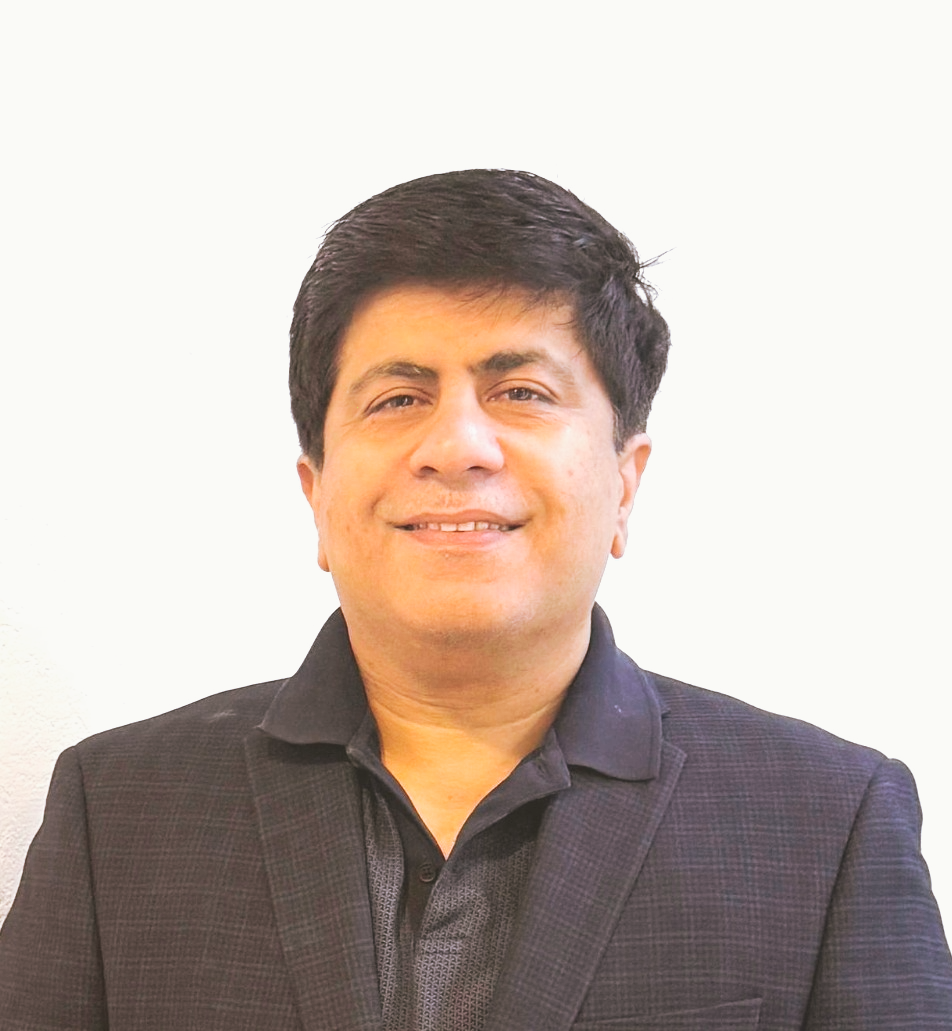
environmental and hazardous-gas monitoring. Attendees will leave with a clear blueprint for moving sensor operations from reactive vigilance to autonomous, governed intelligence. Vipin Kataria is an IEEE Senior Member and Distinguished Fellow with 21+ years of
experience in enterprise cloud platforms, machine learning, and AI systems. As Senior Lead Architect - Data/ML at Picarro, he designs cloud
data solutions and ML-driven analytics for environmental monitoring, processing real-time IoT sensor data for Fortune 500 companies.
His career spans Intel Corporation, Amazon, and Aricent Technologies, where he built scalable solutions across hardware, cloud, and enterprise domains. A sought-after speaker,
Vipin has presented at DSS Miami, IEEE conferences, and the Applied AI Summit. As Chapter Lead for AI Collective's South Bay Chapter, he guides
a global community of 100,000+ AI practitioners, fostering collaboration and knowledge sharing.
He actively contributes to the AI research community as an author, peer-reviewer, and judge for international AI awards and hackathons,
helping evaluate breakthrough innovations. Based in the San Francisco Bay Area, he continues advancing cloud architecture, machine learning, and IoT technologies through industry practice and thought leadership.
Senior Lead Architect - Data/ML at Picarro, USA
Abstract